pendant lighting over a dining table: height and style tips
A pendant light can turn an ordinary dining table into the centre of a room. Its position affects how people see one another, how food looks and whether the fitting feels connected to the table or simply suspended above it. Getting the height right is therefore as important as choosing a popular shade shape or finish.
For pendant lighting over a dining table, the best result usually combines a practical hanging distance with a fitting scaled to the furniture. Australian homes offer several common ceiling heights, from compact city apartments to older houses with generous proportions, so measurements matter more than a universal rule. Local styles also range from coastal timber and rattan to matte black metal and warm brass.
find the right hanging height
A useful starting point is to place the bottom of the pendant approximately 75 to 90 centimetres above the finished tabletop. This gives diners a clear view across the table while keeping the light close enough to illuminate the surface. Large, opaque shades may need a little more height because they block the view; small glass or open pendants can often sit slightly lower.
Measure the distance from the table to the underside of the pendant, not from the floor. Australian dining tables are commonly around 75 centimetres high, while ceiling heights in many Sydney, Melbourne and Brisbane apartments sit near 2400 to 2700 millimetres. In a room with a 2400-millimetre ceiling, a lower edge around 80 to 85 centimetres above the table often creates a comfortable proportion without leaving too much space between the fitting and the ceiling.
The shade size changes the equation. A wide dome needs enough room to avoid looking pressed down over the table, while a slim cylinder can hang lower without dominating the view. Always follow the manufacturer’s minimum clearance instructions, particularly around heat-producing lamps. Adjustable cords and stems are helpful in Australian homes because they make it easier to fine-tune the drop after the table and ceiling positions are confirmed.
match the arrangement to the table shape
Rectangular tables generally suit an even row of pendants. Two lights can balance a table around 180 to 200 centimetres long, while three pendants often look more deliberate over a longer table. Place each pendant near a section of the table rather than over a chair, keeping the spacing consistent so the group reads as one feature.
Round and oval tables require a different approach. A single pendant works well when it is wide enough for the table and does not leave the surface looking underlit. For a larger round table, consider a cluster of three globes or a broad, shallow fitting. A slim pendant above a very large table can appear lost, even if it provides enough light.
Think about sightlines as well as symmetry. Guests should be able to see across the table without looking directly into a bulb, and the fitting should not visually collide with a pendant already installed over a nearby kitchen island. A second group of lights can add style, but matching their scale and suspension height helps the dining area remain distinct rather than cluttered.
choose a shade and finish that suit the room
The shade controls both the character and usefulness of the light. An opal glass diffuser creates a soft, even wash that is practical for everyday meals and homework at the table. Clear glass reveals the lamp and works well with decorative filament-style bulbs, although it can create harsher shadows. Shallow metal shades direct more light downwards and give the room a stronger graphic presence.
Materials should reflect the home rather than simply follow a trend. Rattan and timber shades suit relaxed coastal interiors, particularly around the Gold Coast, Byron Bay and other northern coastal areas. Matte black metal pairs easily with Sydney and Melbourne apartments that mix pale joinery, concrete and stone, while brushed brass or aged bronze adds warmth beside timber furniture and brick walls.
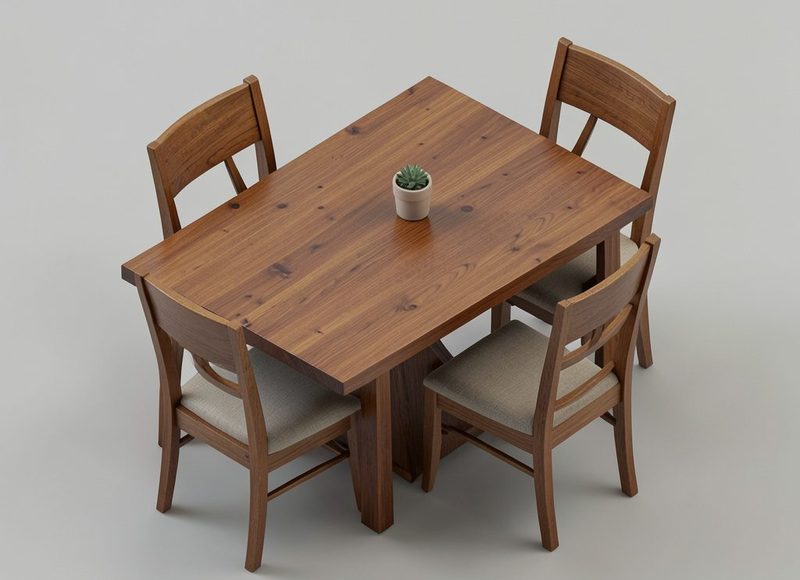
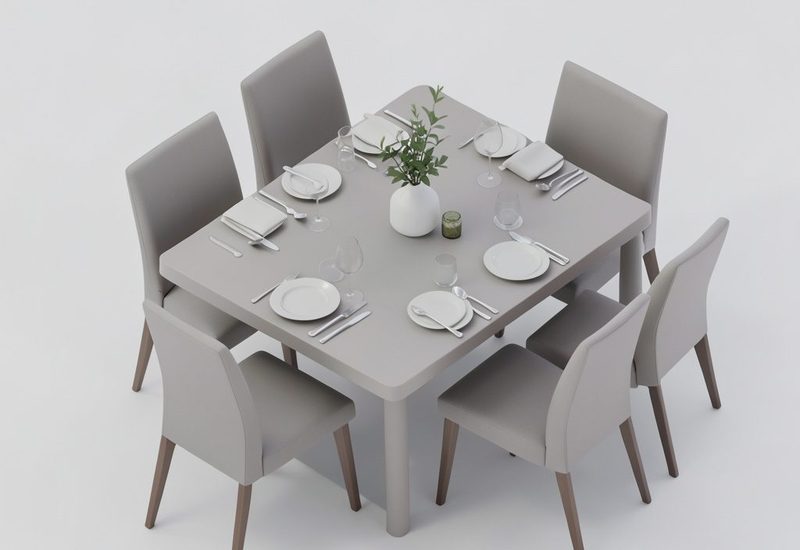
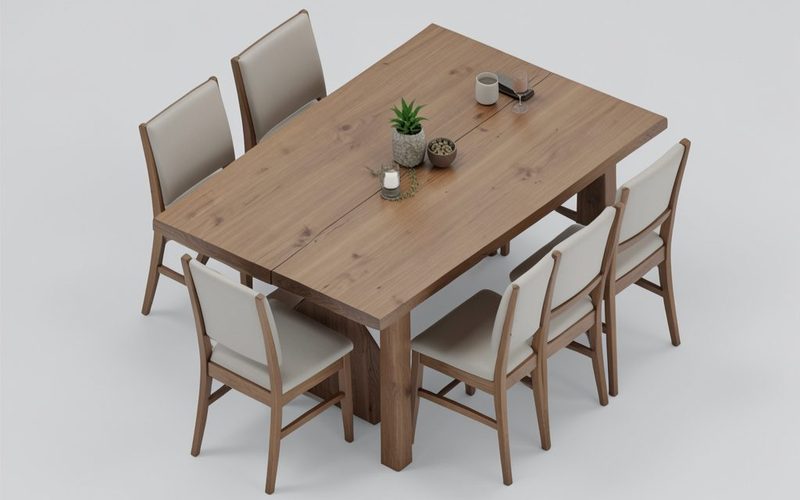
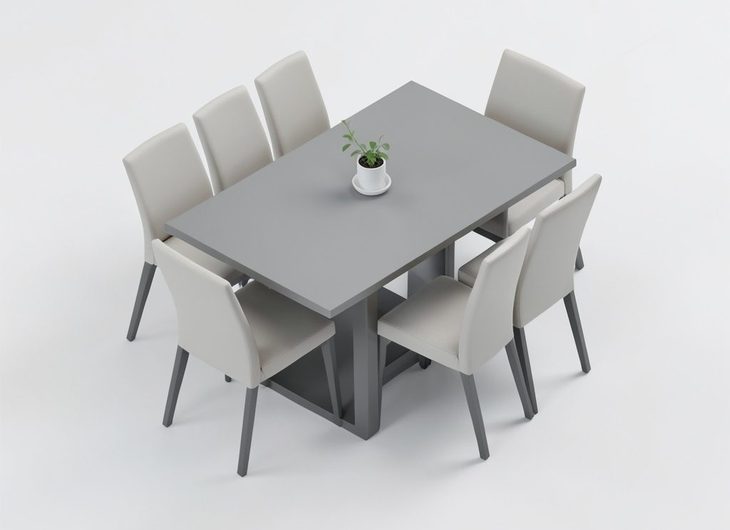
Avoid matching every visible metal in the room. Repeating a finish can make the pendant feel intentional, but too many competing finishes can make a compact dining space look busy. If the table is dark, a lighter shade may provide welcome contrast; if it is pale timber or stone, black, brass or deep green can define the silhouette. The fitting should also relate to nearby chairs, where their shapes and materials meet the table.
balance brightness with comfortable dinner lighting
Look for a lamp colour temperature that flatters food and feels comfortable after sunset. Around 2700 kelvin produces a warm, inviting tone suitable for most dining rooms, while 3000 kelvin offers a slightly crisper result in a modern interior. A high colour-rendering index of 90 or above helps reproduce the colours of food, skin and tableware more accurately.
The right brightness depends on the size of the shade, the table and the room’s other light sources. A small pendant over a compact table may only need a moderate-output lamp, whereas a broad shade or cluster can require several fittings to avoid a dim centre. Dimmers are especially useful in Australia, where a bright afternoon can give way to a long, relaxed dinner during the warmer months.
Showroom lighting can also change how a finish appears, making it harder to judge whether a shade is bright, warm or overly reflective. The way changing visual cues can redirect attention is illustrated in these lightning roulette tips, a useful side comparison when assessing how strongly a fitting draws the eye.
Many Australian fittings run on 240 volts and use common E27 lamps, although integrated LED modules are also available. Check that any dimmer supports the chosen lamp, and buy replacement globes from the same specification to avoid differences in brightness or colour. Buyers commonly compare fittings through Bunnings, specialist lighting stores, online marketplaces and trade counters, so checking the small details on the product label is worthwhile.
check the proportions and installation before buying
Before choosing a pendant, gather accurate measurements and compare them with the available space. This prevents an attractive fitting from becoming too large, too small or awkwardly high in the finished room.
Measurements to take
- The length and width of the dining table
- The distance from the finished tabletop to the ceiling
- The ceiling position relative to the centre of the table
- The approximate width of the surrounding dining area
Next, examine the fitting rather than relying only on its photograph. Check the actual suspension length, the width of the shade and the space it needs around the lamp.
Details to confirm in store
- The adjustable drop or total length of the fitting
- The recommended lamp type and maximum wattage
- Whether the supplied lamp is dimmable and compatible with your switch
- The availability of matching replacement lamps or shades
A pendant may need to be shortened, lowered or connected to a new ceiling point. Ceiling conditions, insulation, wiring and the fitting’s weight are best handled by a licensed Australian electrician, who can also confirm the appropriate dimmer and lamp combination.
Measure first, compare finishes in person and confirm the installation details before ordering. With the right drop, scale and light quality, the pendant will feel naturally connected to the dining table and make evening meals more inviting.