Mixing upholstered and wooden chairs in your dining room
A dining room does not have to look like it came out of a single catalogue. Solid timber chairs bring warmth, structure and a sense of craftsmanship, while upholstered seats add softness, colour and comfort. Mixed sets have moved well past the realm of deliberate mismatch, and most Australian homes today are full of reasons to blend the two: bright afternoon light through big windows, timber floors, open-plan living areas and furniture that doubles as everyday seating.
Local timber is one of the great advantages of living here. Spotted gum, blackbutt, jarrah, messmate, Australian beech and Tasmanian oak all appear in furniture made for the Australian market, sold through names like The Joinery, Freedom, Bunnings and a long list of small workshops in Melbourne, Brisbane and Perth. Because that timber is affordable and widely available, pairing a hardwood frame with a fabric seat is an easy decision rather than an expensive one.
Mixed sets also solve a common local problem: the dining room that doubles as a study, the playroom, or the corner of an open-plan apartment in Melbourne or Sydney where every centimetre counts. Timber chairs handle glare and heat better than fully upholstered ones, while a padded seat makes a three-hour dinner or a working morning much easier to sit through.
What follows is a practical guide to getting the balance right — choosing a timber base, picking fabrics that cope with real life, thinking about proportion, and styling the result so the room reads as deliberate rather than accidental.
Why mixed materials suit Australian dining rooms
Material contrast creates depth without extra furniture. Grain against weave, matte against sheen, cool timber against warm fabric — a room of identical pieces flattens out quickly, almost like a showroom display that has just been unpacked. Timber grounds the space and gives the eye something solid to rest on; upholstery lifts it off the floor and adds the texture that photographs and everyday meals are missing.
Climate is the second reason. Homes on the Sunshine Coast, around Port Macquarie or along Perth's coastal suburbs deal with salt-laden air and fierce ultraviolet light, while northern Queensland interiors face humidity that makes solid fabrics sag and cling. Timber can be sanded and re-oiled locally when it weathers, whereas bleached fabric needs replacing. Upholstering only part of the set means fewer metres of cloth to maintain over the years.
A third factor is resale and longevity. Solid timber chairs are the pieces most families keep for decades, and they move easily into a new house or onto a covered patio. Adding fabric later to a pair of timber frames is a simple way to update a room without replacing everything you own.
Choosing a timber base for your chairs
Start with how the timber is built. Solid boards from local hardwoods will last and can be refinished; quality veneer over engineered timber is lighter and cheaper but still suitable if the seat frame is properly joined. Look for sturdy joints rather than decorative screws, and check that seat height sits around 450 to 470 millimetres so the chairs match a standard 730 to 760 millimetre dining table.
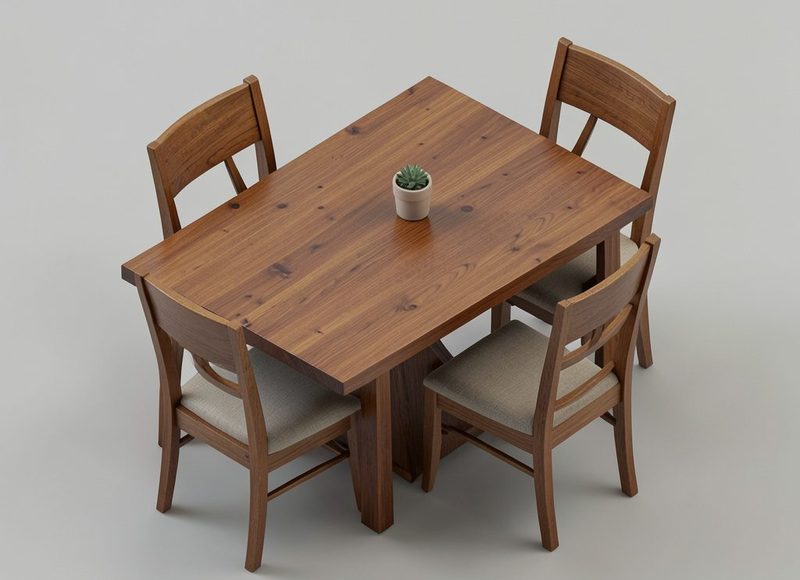
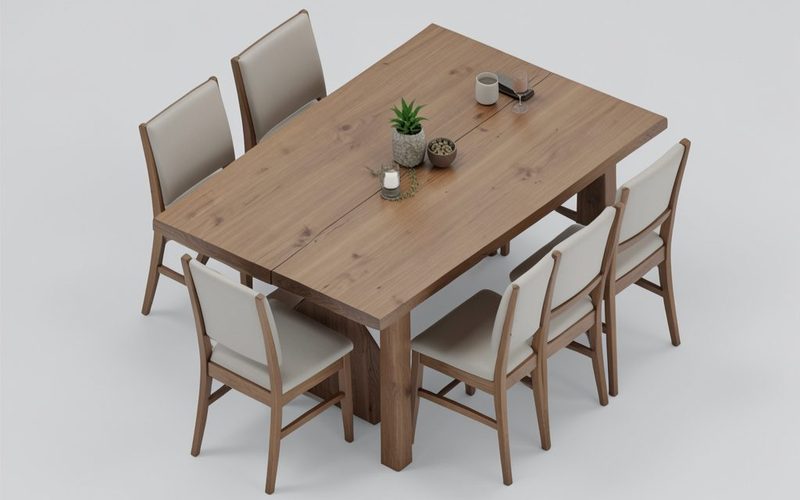
Next, consider the timber tone. If you already own a table, repeat its species or finish rather than introducing a third shade — mixing two woods and one fabric is calm, while three different browns create a cluttered look. A stain or hardwax oil can align a pale imported timber with a darker floor, and a neutral oil finish keeps the natural grain visible in a room with polished concrete or pale boards.
Weight and proportion matter more than most people expect. Slim tapered legs make a timber chair look light in a small room, while chunky turned legs can overwhelm a 90 centimetre round table. Sit in the chair before buying, check that it tucks under the table with a knuckle's clearance, and consider a bench for one side to free up floor space in tighter spaces.
Choosing upholstery that lasts through busy households
Fabric choice comes down to what happens at the table. Woven wool or wool-blend upholstery suits cooler evenings and is popular in Australian homes for its natural stain resistance. Cotton and linen blends feel wonderful but show spills early, so look for performance-treated fabrics with a spill-repellent finish if children, dogs or regular dinner parties are part of the picture.
Removable covers make an enormous difference. A seat cushion that unzips, or a slipcover that can be washed at 40 degrees, turns a risky fabric into a practical one. Before you commit, check the cleaning code on the fabric — W for water-based cleaner, S for solvent — and skim some fabric care and cleaning guidance so you know what a mark actually requires.
Colour is the final piece of the puzzle. Earthy tones have become the local default for good reason: oat, olive, ochre, rust and charcoal sit comfortably against Australian timber and garden views. Keep upholstery to one shade per chair set so the chairs still read as a family, and let small details such as piping or buttons carry the personality.
Balancing height, shape and room size
The simplest rule is to alternate. Two timber chairs, two upholstered chairs, then repeat the pattern around the table so the eye moves around the room rather than stopping on one corner. Odd numbers often work better than even ones, because three upholstered chairs on a round table break the symmetry without looking accidental.
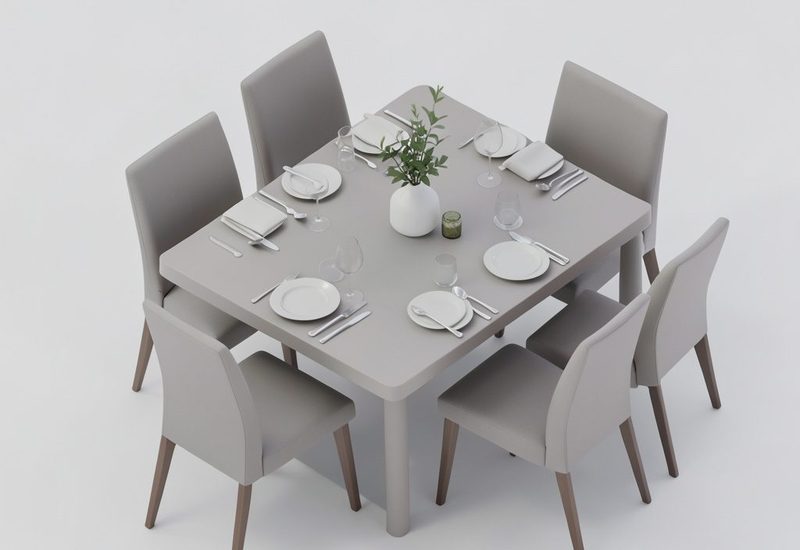
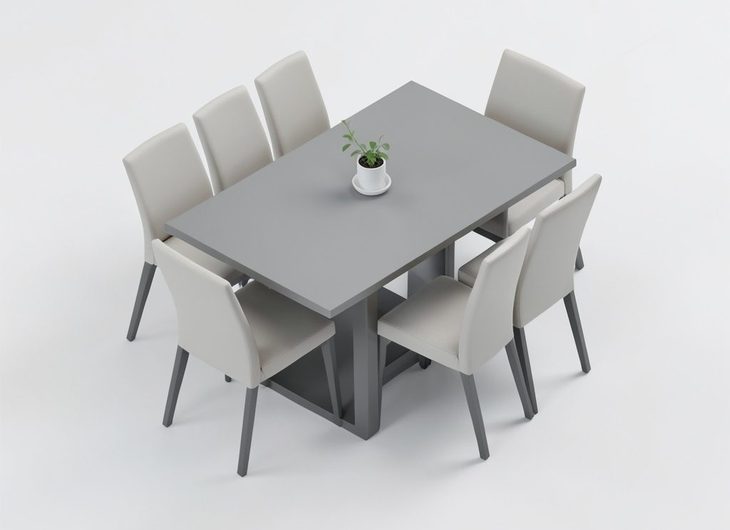
Room size dictates everything else. A 90 centimetre round table seats four comfortably and pairs well with slim timber chairs; a 120 to 140 centimetre round table or a 200 centimetre long table takes six, which is where a mix really earns its place. In apartments in Sydney, Melbourne, Brisbane and Canberra, measure doorways, stairwells and lift sizes before ordering — a beautiful chair that cannot reach the dining room is an expensive ornament.
A rug pulls a mixed set together more effectively than any other single purchase. Leave at least 30 centimetres of rug beyond the chairs on all sides so they stay on it rather than half off it, and choose a wool or wool-blend pile that suits the room. If the room sits on carpet rather than a rug, a rug still helps, and periodic carpet cleaning keeps the whole area looking settled rather than tired.
Styling the mix without overthinking it
Once the chairs are chosen, resist the urge to match everything else to them. A plain table runner, a low centrepiece under 30 centimetres tall, and a pendant hung 70 to 80 centimetres above the table will let the mixed chairs stay in charge. Warm light around 2700K flatters timber grain and brings out fabric texture, and a simple wall clock nearby adds character without competing for attention.
Cushions and seat pads are the easiest way to change the look later. Keep one plain cushion in a neutral tone and one in the upholstery fabric, then swap them seasonally — a light cotton in summer, a heavier wool blend in winter. If you want a wider visual reference for colours, layouts and lighting, browsing more home decor ideas can help you settle on a palette before the furniture arrives.
Common mistakes are easy to avoid: too many timber finishes in one room, a busy rug fighting a patterned seat fabric, chairs sitting too far from the table, or a centrepiece so tall that nobody can talk across it. One strong element in the room, whether that is the rug, the light fitting or the timber itself, is usually enough to make everything else feel coordinated.
Start small and buy in stages. Choose two timber chairs first if that is what suits your table and your floor, then add a pair of upholstered seats when the budget allows and the room needs softening. Measure carefully, check cleaning codes, and let the timber and fabric do the talking — a dining room built around good materials and honest proportions rarely needs anything else to look finished.