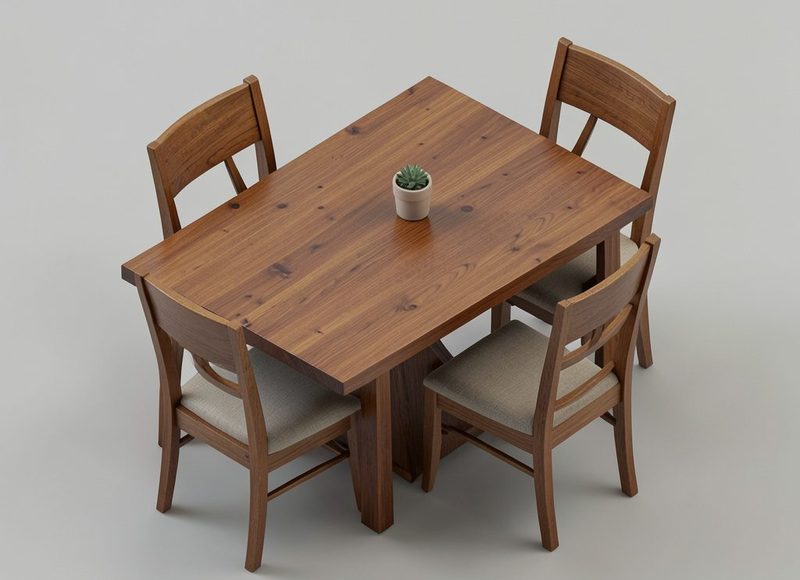
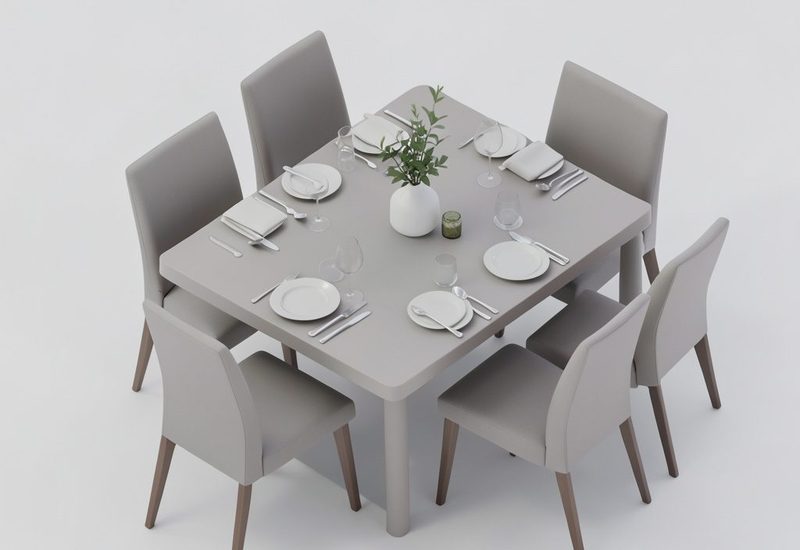
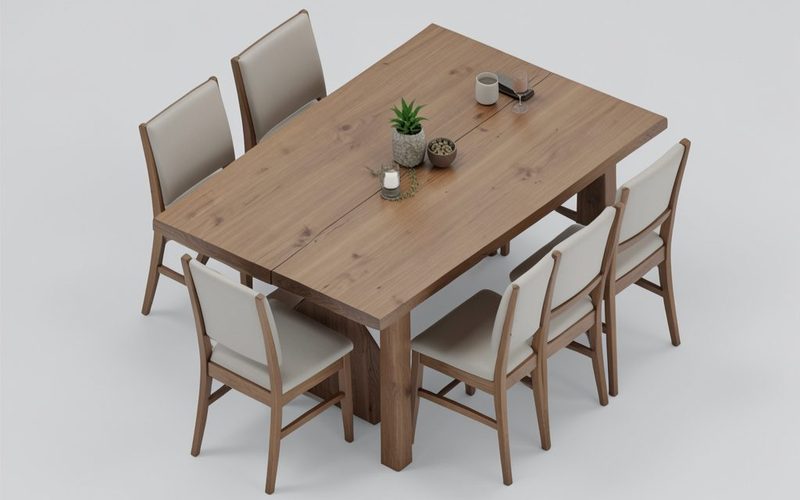
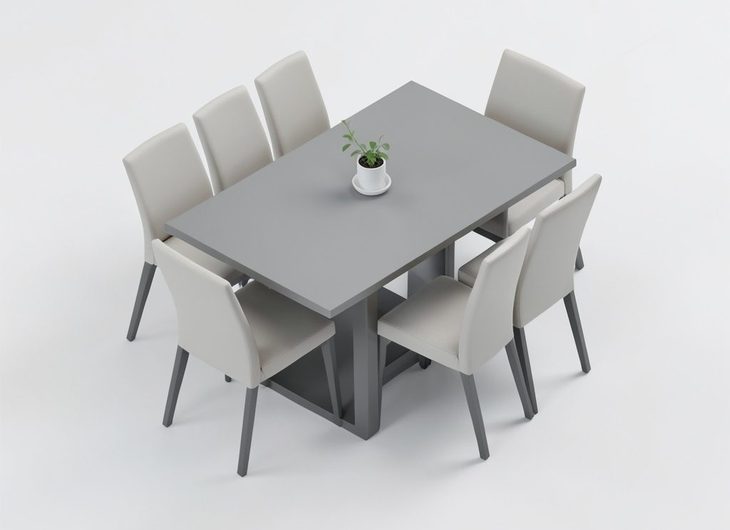
Live edge timber meets modern dining chairs
A live edge dining surface is defined by timber’s natural perimeter, but its appeal depends on what surrounds it. Clean-lined seating can make the slab feel sculptural and contemporary, while rounded forms soften the contrast. The aim is a deliberate pairing, not a collection of unrelated objects.
For Australian homes, proportion and practicality matter as much as style. Compact Sydney strata apartments and narrow Melbourne dining rooms need visual lightness, while Brisbane’s humidity and Perth’s dry heat affect timber finishes. Many households also move between an indoor meal and a balcony or courtyard, so the furniture must work in an everyday, lived-in setting rather than only in a photograph.
The strongest combination starts with clear measurements, a comfortable seat and a durable finish. It then allows natural grain, texture and irregular outlines to lead, with modern chairs providing structure. That balance can feel warm enough for family life and crisp enough for relaxed entertaining.
Finding the right visual balance
Visual contrast is the starting point. A pale, rounded plywood shell creates a clean silhouette against a dark, irregular edge; black metal legs sharpen the same contrast; warm timber frames echo the grain more closely. Upholstery introduces softness, but colour should support the wood rather than compete with it.
| Modern chair style | Effect beside a live edge slab | Practical consideration |
|---|---|---|
| Sculptural plywood shell | Softens the outline with a curved, lightweight profile | Useful in compact dining spaces |
| Slim metal frame | Adds a sharp, graphic contrast to the natural edge | Creates a light, open appearance |
| Solid timber frame | Echoes the grain and reinforces the material theme | Benefits from a contrasting finish |
| Upholstered seat | Softens both colour and texture around the slab | A removable washable cover adds convenience |
After comparing these directions, look beyond a product photograph and sit-test the chairs at the actual surface height. A broader visual inspiration archive can help assemble a mood board, but the final choice should come from physical comfort, available space and the grain of the chosen slab.
Matching scale, seat comfort and proportion
Combining a live edge table with modern dining chairs succeeds when comfort comes before visual effect. Standard dining heights are commonly around 720–760 mm, with chair seats near 430–480 mm, so the pair should be tested together rather than chosen from separate style ranges.
Allow roughly 75–90 cm of width per diner and enough room to pull a chair back without scraping the wall. In a narrow room, tapered legs and a slim pedestal preserve circulation, while broad sled bases can make the slab look heavier. A supportive back matters during long Sunday lunches, and washable seat covers are useful where children share the space.
Choosing timber for Australian conditions
Australian furniture shoppers have a strong local choice of hardwoods, including spotted gum, blackwood and jarrah, as well as Australian-made chair workshops. Reclaimed slabs can add character, but the species, seasoning and moisture history matter. Ask for the origin of the timber and confirm that the edge has been properly stabilised and finished.
Climate changes how the surface behaves. In humid Brisbane or coastal areas, a complete factory seal and regular care limit moisture movement; in dry Perth or heated winter rooms, an oil or hardwax finish may need refreshing as the timber responds to changing humidity. Indoor pieces still need coasters, prompt spill cleanup and protection from direct afternoon sun.
Adapting the pairing to Australian rooms
In a small Sydney apartment, a modest slab can replace a bulky rectangular unit while a round pedestal keeps the floor open. Melbourne terraces often suit a longer slab beside a wall or window, and Perth homes can make good use of a shaded courtyard. In every case, check a balcony’s load rating, access route and strata rules before ordering a dense hardwood top.
Light, textiles and art can either strengthen or blur the pairing. A plain runner, simple pendant and one sculptural lamp keep the edges visible; crowded accessories compete with the timber’s profile. For relaxed Sunday lunches, mix modern chairs with a comfortable bench at one end rather than adding more styles simply to fill space.
Greenery helps connect the dining zone with an outdoor entertaining area. Potted herbs, clipped foliage and cut flowers soften the strong lines, while seasonal choices can change the room without replacing the furniture. When planting borders nearby, perennial planting ideas can provide options that return year after year rather than demanding constant replacement.
Maintaining the edge and protecting the surface
Live edge furniture needs a simple maintenance routine. Vacuum with a soft brush, wipe spills promptly and avoid standing water or abrasive cleaners. Re-oil or wax only as the chosen finish recommends, because incompatible products can leave patches. Coasters, placemats and felt pads protect the surface from heat, cutlery and chair legs.
The irregular edge should also be inspected rather than treated as purely decorative. Check for lifted bark, splinters, movement or new cracks, and have any rough areas eased by the maker. Children and guests are more likely to catch a projecting edge than a conventional squared one, so a stable pedestal, sensible overhang and firm footing are essential.
A buying checklist for a lasting combination
Before placing a deposit, turn the design brief into measurable details: slab dimensions, finished height, chair seat height, timber species, edge treatment, base design, finish and delivery access. Australian Consumer Law guarantees apply to goods sold in Australia, including acceptable quality and matching the description, so records and written specifications matter for custom pieces.
- Measure the room and every delivery route, including stairs, lift dimensions and tight turns.
- Sit-test each chair with the chosen surface height and leave enough clearance for movement.
- Compare several timber samples in morning, afternoon and artificial light.
- Specify the edge treatment, finish, base footprint and warranty in the written quote.
- Confirm assembly, floor protection and rubbish removal before delivery.
A local maker can often adjust the base or chair finish to suit the slab, which is more useful than forcing a standard package into an awkward room. Keep the invoice, timber details and care instructions, and raise any mismatch with the supplier promptly so the remedy can be discussed under the original purchase terms.
Create a dining place people will use
Begin with the room’s use: who eats there, how often, what is stored nearby and whether the surface will move indoors or outdoors. Photograph the space at the same times of day, place a taped floor outline where the dining piece will sit, and test chair clearance before choosing a slab.
Measure first, choose the silhouette second, and ask a local maker to quote the complete pairing. That clear brief is the fastest route to a distinctive, comfortable dining setting ready for everyday Australian life.